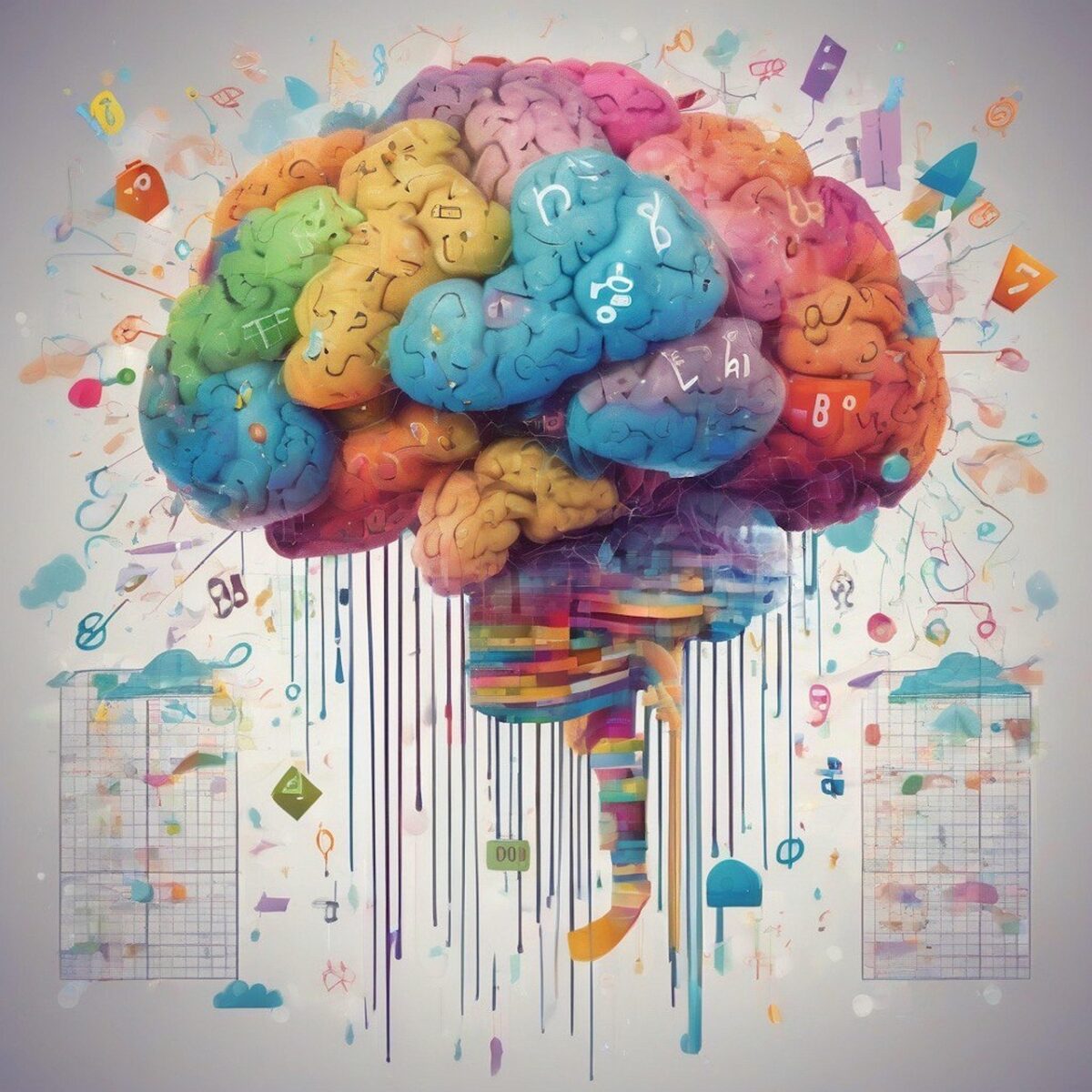

Artificial Intelligence (AI) is one of the most transformative technologies in human history, reshaping industries, economies, and daily life. From early philosophical ideas about artificial beings to modern machine learning systems capable of generating text, images, and complex decisions, AI has undergone a long and fascinating evolution. This article explores the origins, development, milestones, challenges, and future directions of AI in detail.
1. Early Foundations: Philosophical and Mechanical Roots
The concept of artificial intelligence predates modern computers by centuries. Ancient civilizations imagined artificial beings endowed with intelligence or consciousness. Greek mythology, for example, includes stories of mechanical servants and thinking machines. Philosophers such as Aristotle laid the groundwork for logic and reasoning, which would later become essential in AI development.
In the 17th and 18th centuries, thinkers like René Descartes and Gottfried Wilhelm Leibniz explored the idea that human reasoning could be mechanized. Leibniz even envisioned a “calculus of reasoning,” a system through which disputes could be settled using logic alone—an early conceptual precursor to AI.
The Industrial Revolution brought mechanical automata—machines designed to mimic human actions. Though not intelligent, they demonstrated that human-like behavior could be replicated through engineering.
2. Birth of Computing: The Foundation for AI
AI could not emerge without the development of computers. In the 19th century, Charles Babbage designed the Analytical Engine, considered the first concept of a programmable computer. Ada Lovelace, often regarded as the first programmer, speculated that machines could go beyond calculations and manipulate symbols—a key idea for AI.
The real breakthrough came in the 20th century. Alan Turing, a pioneering mathematician, introduced the concept of a universal machine capable of performing any computation. In 1950, he proposed the Turing Test, a method for determining whether a machine can exhibit human-like intelligence. This marked a foundational moment in AI philosophy.
3. The Birth of AI as a Field (1950s–1960s)
Artificial Intelligence officially emerged as a field in 1956 during the Dartmouth Conference. Researchers believed that human intelligence could be precisely described and simulated by machines. Early optimism was high, and scientists predicted rapid progress.
Key developments during this period included:
- Symbolic AI (Good Old-Fashioned AI): Systems that used rules and logic to solve problems.
- Early programs: Such as logic theorem provers and simple game-playing systems.
- Natural language experiments: Early attempts at machine translation and conversation.
One notable program was ELIZA, which simulated conversation by matching patterns in text. Though simple, it demonstrated the potential of human-computer interaction.
4. Expansion and Early Successes (1960s–1970s)
During this period, AI research expanded significantly. Governments and universities invested heavily, particularly in the United States and the United Kingdom.
Major advancements included:
- Problem-solving programs capable of solving algebraic problems.
- Robotics: Early robots could perform basic physical tasks.
- Knowledge representation: Systems began to store and use structured information.
However, limitations soon became apparent. AI systems struggled with real-world complexity, ambiguity, and context. Early programs worked well in controlled environments but failed outside them.
5. The First AI Winter (1970s–1980s)
The gap between expectations and actual progress led to disillusionment. Funding decreased, and AI entered a period known as the AI Winter.
Challenges included:
- Limited computing power.
- Lack of sufficient data.
- Overly ambitious promises that could not be fulfilled.
Many projects were abandoned, and interest in AI declined significantly.
6. Expert Systems and Commercial Growth (1980s)
AI experienced a revival in the 1980s with the rise of expert systems—programs designed to mimic the decision-making abilities of human experts.
Examples included systems used in:
- Medical diagnosis
- Financial analysis
- Industrial processes
Expert systems relied on large sets of rules and knowledge bases. Companies began adopting AI for practical applications, leading to commercial success.
However, these systems had limitations:
- They were expensive to maintain.
- They lacked flexibility.
- They could not learn from new data.
This led to another decline in enthusiasm toward the late 1980s.
7. Machine Learning Emerges (1990s)
The 1990s marked a turning point with the rise of machine learning, a subfield of AI that focuses on enabling machines to learn from data rather than relying solely on predefined rules.
Key developments included:
- Statistical methods replacing purely symbolic approaches.
- Neural networks gaining renewed interest.
- Data-driven models improving performance in real-world tasks.
A landmark moment occurred in 1997 when IBM’s Deep Blue defeated world chess champion Garry Kasparov. This demonstrated that machines could outperform humans in complex strategic tasks.
8. The Data Revolution and AI Resurgence (2000s)
The early 2000s saw rapid growth in data availability due to the internet, social media, and digital technologies. At the same time, computing power increased significantly.
These factors enabled:
- Better training of machine learning models.
- More accurate predictions and classifications.
- Expansion of AI into industries such as healthcare, finance, and e-commerce.
Search engines, recommendation systems, and speech recognition technologies became increasingly sophisticated.
9. Deep Learning Breakthrough (2010s)
The 2010s marked the era of deep learning, a subset of machine learning based on artificial neural networks with multiple layers.
Key breakthroughs included:
- Image recognition surpassing human accuracy in some tasks.
- Natural language processing improvements enabling translation, summarization, and conversation.
- Speech recognition becoming highly accurate.
Deep learning was powered by:
- Large datasets
- High-performance GPUs
- Advanced algorithms
Notable milestones:
- AI defeating human champions in complex games like Go.
- Rapid advancements in autonomous vehicles.
- Widespread use of virtual assistants.
10. Modern AI and Generative Systems (2020s–Present)
In recent years, AI has entered a new phase characterized by generative models and large-scale systems.
Modern AI can:
- Generate human-like text, images, and music.
- Assist in coding, research, and education.
- Analyze vast amounts of data in real time.
Applications include:
- Chatbots and virtual assistants
- Content creation
- Medical diagnostics
- Financial forecasting
These systems are trained on massive datasets and can perform multiple tasks, often referred to as general-purpose AI systems.
11. Key Technologies in AI Evolution
Several core technologies have driven AI’s development:
11.1 Machine Learning
Allows systems to learn patterns from data and improve over time.
11.2 Neural Networks
Inspired by the human brain, these networks process information through interconnected nodes.
11.3 Natural Language Processing (NLP)
Enables machines to understand and generate human language.
11.4 Computer Vision
Allows machines to interpret visual information such as images and videos.
11.5 Robotics
Combines AI with physical machines to perform tasks in the real world.
12. Challenges and Ethical Considerations
Despite its progress, AI presents significant challenges:
12.1 Bias and Fairness
AI systems can inherit biases from training data, leading to unfair outcomes.
12.2 Privacy Concerns
Large datasets often include sensitive personal information.
12.3 Job Displacement
Automation may replace certain types of jobs, creating economic challenges.
12.4 Security Risks
AI can be misused for cyberattacks, misinformation, and surveillance.
12.5 Lack of Transparency
Some AI models, especially deep learning systems, are difficult to interpret.
Addressing these challenges requires collaboration between governments, researchers, and industry.
13. The Future of AI
The future of AI holds immense potential:
13.1 Artificial General Intelligence (AGI)
Researchers aim to develop systems that can perform any intellectual task a human can do.
13.2 Human-AI Collaboration
AI will increasingly work alongside humans, enhancing productivity rather than replacing it.
13.3 AI in Healthcare
Advancements may lead to early disease detection, personalized treatment, and improved patient outcomes.
13.4 Smart Cities and Automation
AI will optimize transportation, energy usage, and urban planning.
13.5 Ethical AI Development
Greater emphasis will be placed on fairness, accountability, and transparency.
14. Conclusion
The evolution of artificial intelligence is a story of ambition, setbacks, and remarkable breakthroughs. From philosophical ideas about mechanized reasoning to powerful modern systems capable of generating content and solving complex problems, AI has come a long way.
Its history reflects a pattern of optimism, challenge, and renewal. Each phase—early symbolic AI, expert systems, machine learning, and deep learning—has contributed to the current landscape.
Today, AI is not just a technological tool but a transformative force shaping the future of humanity. As it continues to evolve, the focus must remain on responsible development, ethical considerations, and ensuring that its benefits are shared widely.
The journey of AI is far from over. In many ways, it is only just beginning.
No responses yet