A Comprehensive Guide for Modern Healthcare
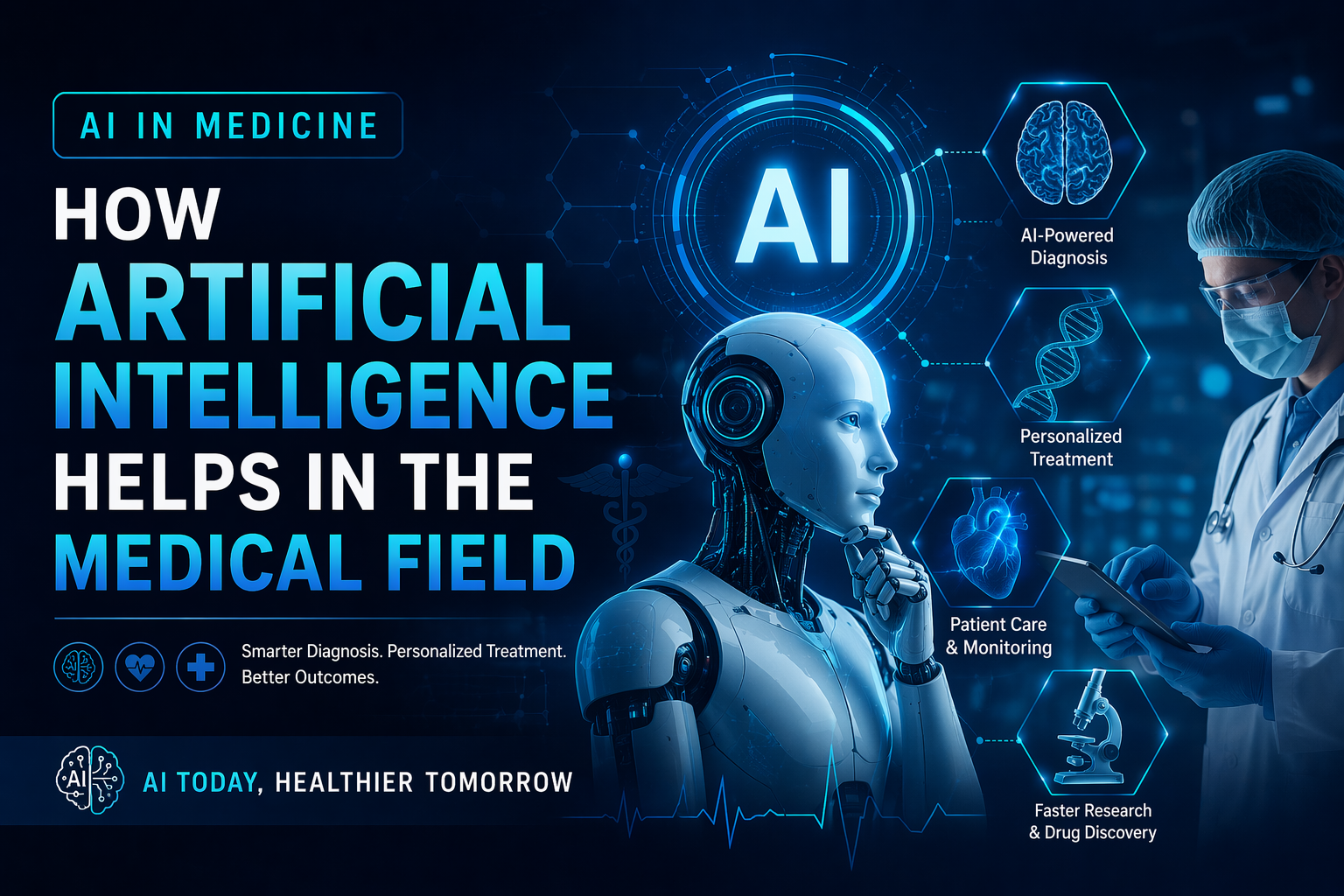
Artificial Intelligence (AI) is transforming the medical field at an unprecedented pace. From diagnosing diseases to improving patient care and accelerating drug discovery, AI is revolutionizing how healthcare systems operate. With the growing demand for efficient, accurate, and accessible medical services, AI has emerged as a powerful tool that enhances the capabilities of doctors, nurses, and healthcare organizations.
This article provides a detailed overview of how AI helps in the medical field, its applications, benefits, challenges, and future potential.
Introduction to AI in Healthcare
Artificial Intelligence refers to computer systems that can perform tasks that typically require human intelligence. These tasks include learning, reasoning, problem-solving, and decision-making. In healthcare, AI is used to analyze complex medical data, assist in diagnosis, personalize treatments, and automate administrative processes.
The medical field generates vast amounts of data every day, including patient records, imaging data, laboratory results, and clinical notes. AI helps process and interpret this data quickly and accurately, enabling healthcare professionals to make better decisions.
As a result, AI is improving efficiency, reducing errors, and enhancing patient outcomes across the healthcare system.
AI in Medical Diagnosis
One of the most important applications of AI in healthcare is medical diagnosis.
Early Disease Detection
AI systems can detect diseases at an early stage by analyzing medical data such as imaging scans, blood tests, and genetic information. Early detection is crucial for diseases like cancer, heart disease, and diabetes.
Medical Imaging Analysis
AI-powered tools can analyze X-rays, MRIs, CT scans, and ultrasounds with high accuracy. These systems can identify abnormalities that may be missed by human eyes.
Accuracy and Speed
AI systems process data faster than humans and can provide highly accurate results. This reduces diagnostic errors and improves patient outcomes.
Examples
- Detecting tumors in cancer patients
- Identifying fractures in bones
- Diagnosing neurological disorders
AI assists doctors rather than replacing them, acting as a powerful support system in clinical decision-making.
AI in Personalized Treatment
Every patient is different, and AI enables personalized healthcare.
Tailored Treatment Plans
AI analyzes patient data, including medical history, genetics, and lifestyle, to recommend personalized treatment plans.
Precision Medicine
AI helps doctors select the most effective medications and therapies based on individual patient characteristics.
Improved Outcomes
Personalized treatment leads to better recovery rates and fewer side effects.
Example
AI can recommend specific cancer treatments based on a patient’s genetic profile, increasing the chances of success.
AI in Drug Discovery and Development
Developing new drugs is a time-consuming and expensive process. AI is accelerating this process significantly.
Faster Research
AI analyzes large datasets to identify potential drug candidates quickly.
Predicting Drug Effects
AI can predict how a drug will interact with the human body, reducing the need for extensive testing.
Cost Reduction
AI reduces research costs by streamlining the drug development process.
Impact
AI has already contributed to the development of new treatments and vaccines, demonstrating its potential to transform pharmaceutical research.
AI in Robotic Surgery
Robotic surgery is one of the most advanced applications of AI in healthcare.
Precision and Control
AI-powered robotic systems assist surgeons in performing complex procedures with high precision.
Minimally Invasive Procedures
Robotic surgery reduces the need for large incisions, leading to faster recovery and less pain.
Reduced Risk
AI helps minimize human errors during surgery.
Benefits
- Shorter hospital stays
- Faster recovery
- Improved surgical outcomes
Robotic systems enhance the skills of surgeons, making procedures safer and more efficient.
AI in Patient Monitoring and Care
AI plays a crucial role in monitoring patients and improving care.
Remote Monitoring
AI-powered devices track patient health in real time, including heart rate, blood pressure, and oxygen levels.
Early Warning Systems
AI can detect early signs of deterioration and alert healthcare providers.
Chronic Disease Management
AI helps manage chronic conditions such as diabetes and heart disease by providing continuous monitoring and insights.
Impact
Remote monitoring reduces hospital visits and improves patient convenience and safety.

AI in Medical Research
AI is transforming medical research by enabling faster and more accurate analysis.
Data Analysis
AI processes large datasets to identify patterns and trends.
Clinical Trials
AI helps design and manage clinical trials, improving efficiency and success rates.
Discovering New Insights
AI can uncover relationships between diseases, treatments, and patient outcomes that were previously unknown.
Benefits
- Faster research
- Improved accuracy
- Better understanding of diseases
AI in Administrative Tasks
Healthcare systems involve a significant amount of administrative work. AI helps automate these tasks.
Scheduling and Billing
AI systems manage appointments, billing, and insurance claims efficiently.
Electronic Health Records (EHR)
AI organizes and analyzes patient records, making them easily accessible.
Reducing Workload
Automation reduces the workload on healthcare staff, allowing them to focus on patient care.
Outcome
Improved efficiency and reduced operational costs.
AI in Mental Health Care
AI is also making a significant impact in mental health.
Virtual Assistants
AI-powered chatbots provide support and guidance to patients.
Early Detection
AI analyzes speech and behavior patterns to detect mental health issues such as depression and anxiety.
Accessibility
AI makes mental health support more accessible, especially in remote areas.
Benefits
- Increased accessibility
- Reduced stigma
- Continuous support
AI in Radiology and Imaging
Radiology is one of the fields most impacted by AI.
Automated Image Analysis
AI systems can analyze medical images quickly and accurately.
Improved Diagnosis
AI assists radiologists in detecting abnormalities such as tumors and infections.
Efficiency
AI reduces the time required to analyze images, improving workflow.
AI in Predictive Analytics
Predictive analytics is a powerful application of AI in healthcare.
Risk Assessment
AI predicts the likelihood of diseases based on patient data.
Preventive Care
AI enables preventive measures by identifying at-risk individuals.
Resource Planning
AI helps hospitals manage resources effectively by predicting patient demand.
Advantages of AI in the Medical Field
AI offers numerous benefits that improve healthcare systems.
Improved Accuracy
AI reduces human errors in diagnosis and treatment.
Faster Processes
AI speeds up medical procedures and decision-making.
Cost Efficiency
Automation reduces healthcare costs.
Better Patient Outcomes
AI improves the quality of care and patient satisfaction.
Accessibility
AI makes healthcare services more accessible to people worldwide.
Challenges and Limitations
Despite its benefits, AI also presents challenges.
Data Privacy
Protecting patient data is a major concern.
High Costs
Implementing AI systems can be expensive.
Ethical Issues
AI raises questions about decision-making and accountability.
Dependence on Technology
Over-reliance on AI may reduce human expertise.
Ethical Considerations in AI Healthcare
The use of AI in healthcare raises important ethical questions.
Patient Consent
Patients must be informed about the use of AI in their care.
Transparency
AI systems should be transparent and explainable.
Fairness
AI must be free from bias to ensure equal treatment for all patients.
The Future of AI in Healthcare
The future of AI in the medical field is promising.
Emerging Trends
- AI-powered diagnostics
- Advanced robotic surgeries
- Personalized medicine
- Integration with wearable devices
Potential Impact
AI will continue to improve healthcare efficiency, accuracy, and accessibility.
Global Reach
AI has the potential to bring quality healthcare to underserved regions.
Conclusion
Artificial Intelligence is revolutionizing the medical field by improving diagnosis, treatment, research, and patient care. It enhances the capabilities of healthcare professionals, reduces errors, and makes healthcare more efficient and accessible.
However, challenges such as data privacy, ethical concerns, and high costs must be addressed to fully realize the potential of AI in healthcare.
As technology continues to evolve, AI will play an increasingly important role in shaping the future of medicine. It is not just a tool but a transformative force that is redefining how healthcare is delivered, ultimately leading to better outcomes for patients around the world.
No responses yet