A Comprehensive Overview for Modern Defense
Artificial Intelligence (AI) has become one of the most transformative technologies of the 21st century, reshaping industries, economies, and global power structures. Among its most significant applications is its integration into military operations. From enhancing intelligence gathering to enabling autonomous systems and improving decision-making, AI is revolutionizing how modern militaries operate.
This article provides a comprehensive overview of how AI is used in military fields, the advantages it offers, the challenges it presents, and what the future may hold.
Introduction to AI in Military Applications
Artificial Intelligence refers to the simulation of human intelligence in machines that are programmed to think, learn, and make decisions. In the military context, AI is used to process vast amounts of data, automate repetitive tasks, and assist in strategic and tactical operations.
Modern warfare is increasingly data-driven. Military organizations rely on information from satellites, drones, sensors, radar systems, and communication networks. The sheer volume of this data makes it impossible for humans alone to process efficiently. AI fills this gap by analyzing data in real time, identifying patterns, and providing actionable insights.
As a result, AI enables faster decision-making, improved accuracy, and more efficient operations, giving militaries a significant strategic advantage.
AI in Intelligence, Surveillance, and Reconnaissance (ISR)
One of the most critical applications of AI in the military is in Intelligence, Surveillance, and Reconnaissance (ISR).
Data Processing and Analysis
AI systems can analyze massive datasets from multiple sources, including satellite imagery, drone footage, and intercepted communications. Machine learning algorithms identify patterns and anomalies that might indicate potential threats.
Real-Time Threat Detection
AI can detect suspicious activities such as unusual troop movements, unauthorized border crossings, or changes in infrastructure. These capabilities allow military forces to respond quickly to emerging threats.
Facial and Object Recognition
Advanced AI systems use computer vision to recognize faces, vehicles, weapons, and other objects. This helps identify targets and monitor areas of interest with high precision.
Impact on Military Operations
By improving situational awareness, AI enables commanders to make informed decisions quickly. It reduces the time between data collection and action, which is crucial in high-stakes environments.
AI in Decision-Making and Strategic Planning
Military operations often involve complex decisions that must be made under pressure. AI assists in this process by providing data-driven recommendations.
Predictive Analytics
AI uses historical data and real-time inputs to predict future events. For example, it can estimate the likelihood of enemy attacks or identify vulnerable locations.
Scenario Simulation
AI-powered systems can simulate multiple scenarios and outcomes, allowing military leaders to evaluate different strategies before taking action.
Decision Support Systems
AI acts as a support tool, providing insights and recommendations while leaving final decisions to human commanders. This combination of human judgment and machine intelligence enhances overall effectiveness.
Benefits
- Faster decision-making
- Reduced uncertainty
- Improved strategic outcomes
Autonomous Systems and Robotics
AI has enabled the development of autonomous systems that can operate with minimal human intervention.
Unmanned Aerial Vehicles (UAVs)
AI-powered drones are widely used for surveillance, reconnaissance, and targeted operations. These drones can navigate complex environments, identify targets, and adapt to changing conditions.
Unmanned Ground Vehicles (UGVs)
Ground-based robots are used for tasks such as bomb disposal, logistics support, and reconnaissance in dangerous environments.
Autonomous Naval Systems
AI is also used in unmanned ships and underwater vehicles for surveillance and mine detection.
Advantages
- Reduced risk to human soldiers
- Increased operational efficiency
- Ability to operate in hazardous conditions
Autonomous systems represent a significant shift in military strategy, enabling operations that were previously too dangerous or difficult for human personnel.
AI in Cybersecurity and Cyber Warfare
Cyber warfare has become a critical aspect of modern military strategy. AI plays a vital role in defending against and conducting cyber operations.
Threat Detection
AI systems monitor networks for unusual activity, identifying potential cyber threats before they can cause damage.
Automated Response
AI can respond to cyberattacks in real time, isolating affected systems and preventing the spread of malware.
Offensive Capabilities
In addition to defense, AI is used to develop advanced cyber tools for offensive operations, including disrupting enemy communication systems.
Importance
With the increasing reliance on digital infrastructure, AI-driven cybersecurity is essential for protecting sensitive information and maintaining operational integrity.
AI in Logistics and Supply Chain Management
Efficient logistics are crucial for successful military operations. AI helps optimize the movement of resources, personnel, and equipment.
Predictive Maintenance
AI analyzes data from equipment sensors to predict when maintenance is needed. This reduces downtime and prevents unexpected failures.
Resource Allocation
AI systems determine the most efficient way to distribute supplies, ensuring that troops have what they need when they need it.
Transportation Optimization
AI improves route planning and transportation efficiency, reducing costs and delivery times.
Impact
By streamlining logistics, AI enhances operational readiness and reduces waste, making military operations more efficient.
AI in Training and Simulation
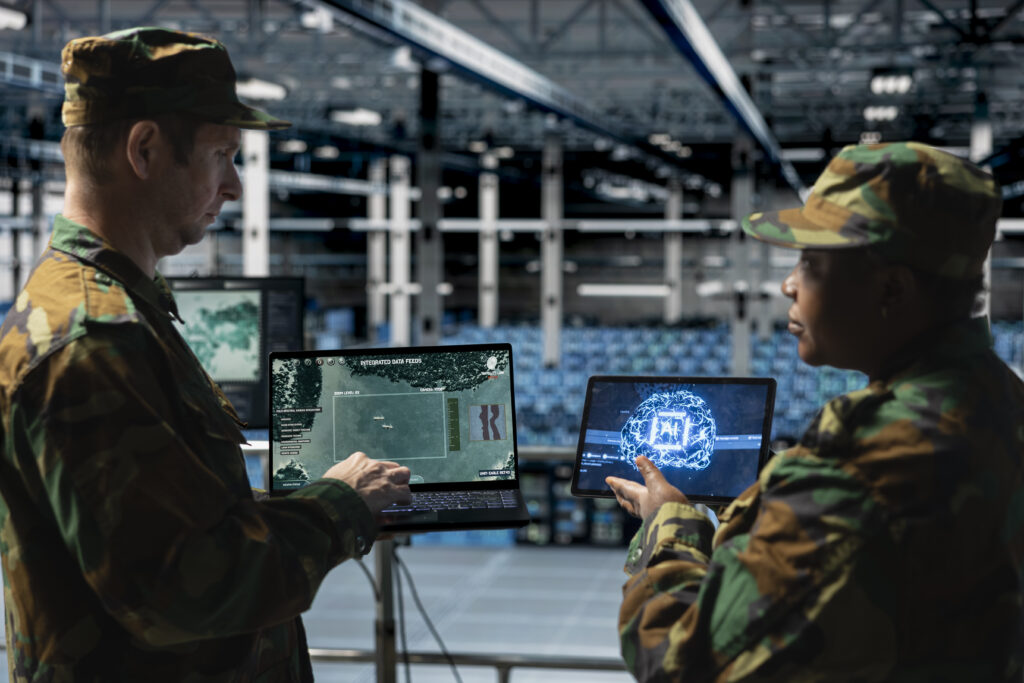
Training is a critical component of military preparedness. AI enhances training programs by making them more realistic and effective.
Virtual Simulations
AI-powered simulations create realistic combat scenarios, allowing soldiers to practice in a safe environment.
Personalized Training
AI adapts training programs to individual needs, helping soldiers improve specific skills.
Real-Time Feedback
AI systems provide immediate feedback during training, enabling continuous improvement.
Benefits
- Cost-effective training
- Improved skill development
- Enhanced readiness
AI in Battlefield Communication
Effective communication is essential for coordinating military operations. AI improves communication systems in several ways.
Signal Enhancement
AI enhances signal clarity, even in environments with interference or jamming.
Data Compression
AI optimizes data transmission, ensuring efficient communication in bandwidth-limited situations.
Language Translation
AI-powered translation tools enable communication between multinational forces.
Outcome
Improved communication leads to better coordination and more successful missions.
Human-Machine Collaboration
Rather than replacing humans, AI is designed to work alongside them.
Augmented Decision-Making
AI provides insights and recommendations, while humans make final decisions.
Increased Efficiency
By handling routine tasks, AI allows soldiers to focus on critical activities.
Improved Coordination
AI enhances teamwork by providing real-time information and analysis.
Significance
Human-machine collaboration combines the strengths of both, leading to better outcomes.
AI in Target Recognition and Precision Operations
Precision is a key factor in modern military operations. AI improves accuracy in identifying and engaging targets.
Image and Video Analysis
AI analyzes visual data to identify targets with high accuracy.
Reduced Collateral Damage
By improving precision, AI helps minimize unintended damage.
Faster Engagement
AI enables rapid identification and response, increasing mission success rates.
Advantages of AI in Military Fields
AI offers numerous benefits that enhance military capabilities.
Speed and Efficiency
AI processes information faster than humans, enabling quick decision-making.
Accuracy
AI reduces errors and improves precision in operations.
Safety
AI minimizes the need for human involvement in dangerous tasks.
Cost Savings
Automation reduces operational costs and resource consumption.
Strategic Advantage
Countries that adopt AI gain a competitive edge in military capabilities.
Challenges and Risks of AI in Military Use
Despite its advantages, AI also presents challenges that must be addressed.
Ethical Concerns
The use of autonomous weapons raises questions about accountability and moral responsibility.
Reliability Issues
AI systems may produce incorrect results due to faulty data or programming errors.
Cybersecurity Risks
AI systems can be targeted by hackers, potentially compromising operations.
Lack of Transparency
Some AI systems operate as “black boxes,” making it difficult to understand how decisions are made.
Overdependence
Excessive reliance on AI may reduce human skills and decision-making abilities.
Legal and Ethical Considerations
The integration of AI into military operations raises important legal and ethical questions.
Autonomous Weapons Debate
There is ongoing debate about whether autonomous weapons should be regulated or banned.
Accountability
Determining responsibility for AI-driven actions is a complex issue.
International Regulations
Efforts are being made to establish global standards for the use of AI in warfare.
Importance
Addressing these issues is essential for ensuring the responsible use of AI in the military.
The Future of AI in Military Fields
The future of AI in the military is both promising and complex.
Emerging Trends
- Advanced autonomous systems
- AI-driven battlefield management
- Enhanced human-machine collaboration
- Integration with other technologies like robotics and quantum computing
Potential Developments
AI could enable fully autonomous operations, faster decision-making systems, and more efficient resource management.
Global Impact
Countries investing in AI will likely gain a strategic advantage, potentially reshaping global power dynamics.
Conclusion
Artificial Intelligence is transforming military operations in profound ways. From intelligence gathering and decision-making to logistics and cybersecurity, AI enhances efficiency, accuracy, and effectiveness across all aspects of defense.
However, the use of AI in the military also raises important ethical, legal, and technical challenges. Addressing these issues is essential to ensure that AI is used responsibly and effectively.
As technology continues to evolve, AI will play an increasingly central role in shaping the future of warfare. Militaries that successfully integrate AI into their operations will be better equipped to handle the complexities of modern conflict, making AI not just a tool, but a cornerstone of future defense strategies.
No responses yet