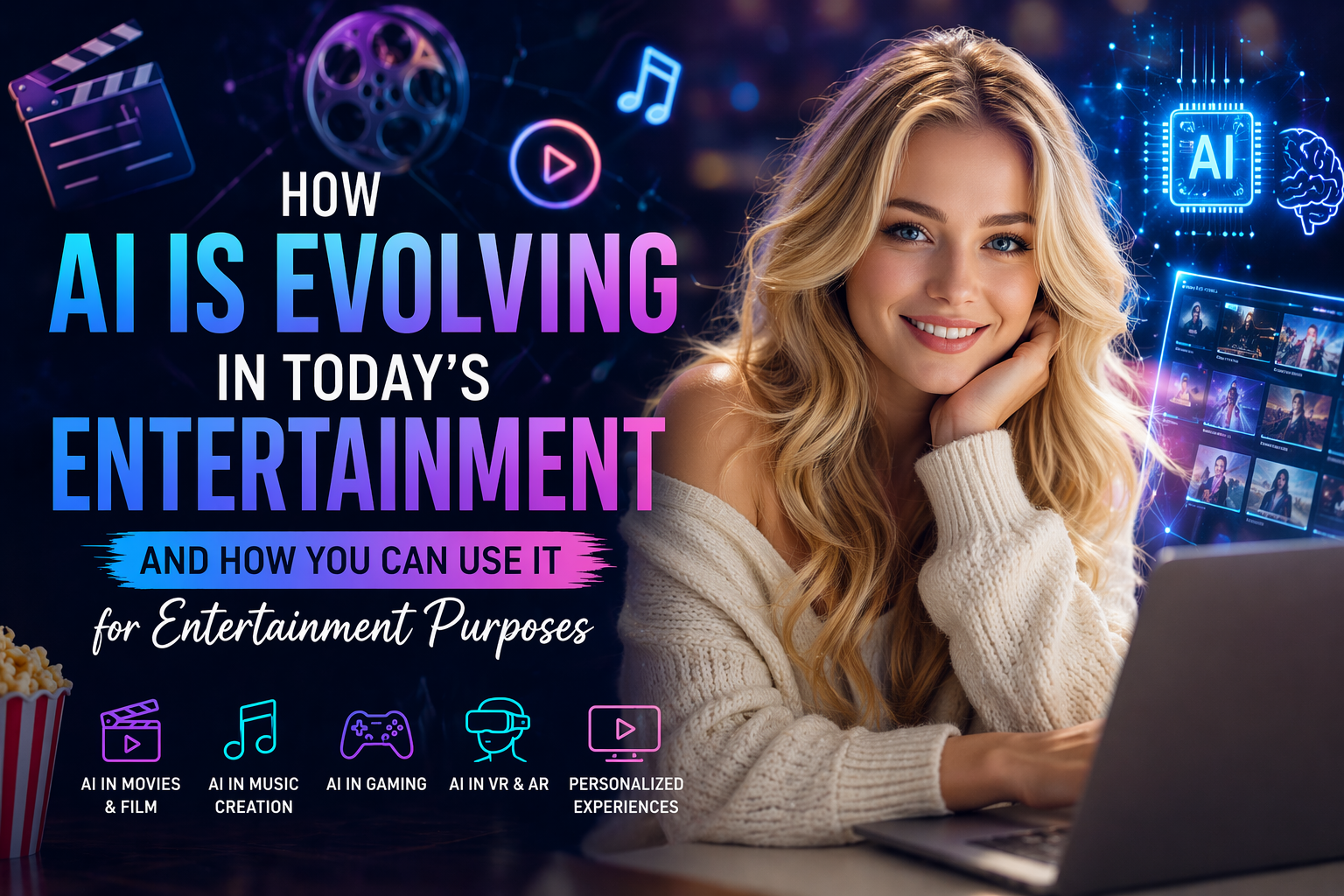
Artificial Intelligence (AI) is no longer a futuristic concept—it is already reshaping how we create, distribute, and experience entertainment. From personalized movie recommendations to AI-generated music, virtual influencers, and immersive gaming worlds, AI is transforming the entertainment industry at every level. It is changing not only how content is produced but also how audiences interact with it.
This article explores how AI is evolving in today’s entertainment landscape and how individuals and creators can use it for entertainment purposes.
Introduction to AI in Entertainment
Artificial Intelligence refers to systems that can mimic human intelligence by learning from data, recognizing patterns, and making decisions. In entertainment, AI is used to analyze audience behavior, generate content, enhance user experiences, and automate production processes.
The entertainment industry includes film, television, music, gaming, social media, and digital content creation. AI is now deeply embedded in all these sectors, helping creators produce high-quality content faster while giving audiences more personalized and engaging experiences.
The Evolution of AI in Entertainment
AI in entertainment has evolved significantly over the past decade.
Early Stage
Initially, AI was used for basic tasks such as:
- Content recommendations
- Data analysis
- Audience tracking
Streaming platforms used algorithms to suggest movies and shows based on viewing history.
Growth Phase
As AI technology improved, it began to:
- Assist in video editing
- Generate music and scripts
- Enhance visual effects
AI tools became more accessible, allowing creators to experiment with new forms of content.
Modern Era
Today, AI is capable of:
- Creating realistic videos and animations
- Generating voices and music
- Building virtual worlds
- Personalizing entire entertainment experiences
AI is no longer just a support tool—it is becoming a creative partner.
AI in Movies and Film Production
The film industry has embraced AI in many ways.
Scriptwriting and Story Development
AI tools can analyze successful scripts and generate story ideas, dialogue, and plot structures. While human creativity remains essential, AI helps speed up the writing process.
Visual Effects (VFX)
AI enhances visual effects by:
- Creating realistic environments
- Improving CGI quality
- Reducing production time
Filmmakers can now produce high-quality visuals at lower costs.
Editing and Post-Production
AI automates video editing tasks such as:
- Scene selection
- Color correction
- Sound synchronization
This allows editors to focus on creative decisions rather than repetitive tasks.
Audience Insights
AI analyzes audience preferences to predict which films are likely to succeed, helping studios make better investment decisions.
AI in Music Industry
AI is revolutionizing how music is created and consumed.
Music Generation
AI can compose original music in different styles, genres, and moods. It can create background scores, beats, and even full songs.
Voice Synthesis
AI can replicate human voices, allowing artists to experiment with new sounds or recreate voices.
Music Recommendation
Streaming platforms use AI to recommend songs based on user preferences, listening habits, and mood.
Benefits for Artists
- Faster music production
- New creative possibilities
- Access to global audiences
AI enables both professional musicians and beginners to create high-quality music.

AI in Gaming
The gaming industry is one of the biggest beneficiaries of AI.
Intelligent NPCs (Non-Player Characters)
AI makes game characters smarter and more realistic. NPCs can:
- Adapt to player behavior
- Learn from interactions
- Provide dynamic challenges
Procedural Content Generation
AI generates game environments, levels, and scenarios automatically, making games more diverse and engaging.
Personalized Gaming Experience
AI adjusts difficulty levels and gameplay based on player skills and preferences.
Realistic Graphics and Physics
AI enhances graphics, animations, and physics simulations, creating immersive gaming experiences.
AI in Streaming and Content Platforms
Streaming platforms rely heavily on AI to enhance user experience.
Content Recommendations
AI analyzes user data to suggest movies, shows, and videos that match individual preferences.
Personalized Feeds
Social media platforms use AI to curate personalized content feeds, ensuring users see what interests them most.
Content Moderation
AI helps identify and remove inappropriate or harmful content, maintaining platform safety.
Impact
AI keeps users engaged by delivering relevant and entertaining content, increasing satisfaction and retention.
AI in Social Media and Digital Content Creation
Social media has become a major entertainment platform, and AI plays a key role in content creation.
AI Video Editing Tools
Creators can use AI to:
- Edit videos automatically
- Add effects and transitions
- Generate subtitles
AI Image Generation
AI tools create stunning images, artwork, and graphics for social media posts.
Virtual Influencers
AI-generated influencers are gaining popularity. These digital characters interact with audiences and promote brands.
Content Optimization
AI suggests the best times to post, trending topics, and hashtags to maximize engagement.
AI in Virtual Reality (VR) and Augmented Reality (AR)
AI enhances immersive technologies like VR and AR.
Realistic Environments
AI creates lifelike virtual worlds for gaming, movies, and simulations.
Interactive Experiences
AI enables real-time interaction within virtual environments, making experiences more engaging.
Applications
- Virtual concerts
- Interactive storytelling
- Training simulations
How You Can Use AI for Entertainment
AI is not limited to big industries—you can also use it for personal entertainment.
1. Create Music
Use AI tools to:
- Generate beats
- Compose songs
- Experiment with different styles
Even beginners can create professional-quality music.
2. Make Videos and Content
AI tools help you:
- Edit videos quickly
- Add special effects
- Create animations
You can start a YouTube channel or social media page easily.
3. Generate Images and Art
AI allows you to create:
- Digital art
- Posters
- Thumbnails
This is useful for content creators and hobbyists.
4. Play AI-Powered Games
Enjoy games with:
- Smart characters
- Dynamic storylines
- Personalized challenges
5. Watch Personalized Content
Streaming platforms use AI to recommend:
- Movies
- TV shows
- Videos
You get content tailored to your interests.
6. Chat with AI Characters
AI chatbots can simulate conversations with fictional characters, providing a unique entertainment experience.
7. Create Stories and Scripts
AI writing tools help you:
- Write stories
- Generate scripts
- Explore creative ideas
Benefits of AI in Entertainment
AI offers many advantages in the entertainment industry.
Enhanced Creativity
AI provides new tools and ideas, helping creators push creative boundaries.
Efficiency
AI automates repetitive tasks, saving time and effort.
Personalization
AI delivers customized content based on user preferences.
Accessibility
AI makes content creation accessible to everyone, not just professionals.
Cost Reduction
AI reduces production costs, making entertainment more affordable.
Challenges and Concerns
Despite its benefits, AI in entertainment also raises concerns.
Ethical Issues
AI-generated content can raise questions about originality and ownership.
Job Displacement
Automation may reduce the need for certain roles in the industry.
Deepfakes
AI can create realistic fake videos, which can be misused.
Dependence on Technology
Over-reliance on AI may reduce human creativity.
The Future of AI in Entertainment
The future of AI in entertainment is exciting and full of possibilities.
Hyper-Personalized Content
AI will create content tailored to individual users, including personalized movies and games.
Fully AI-Generated Media
Entire films, music albums, and games may be created using AI.
Interactive Storytelling
Audiences will become part of the story, influencing outcomes in real time.
Integration with Emerging Technologies
AI will combine with technologies like VR, AR, and blockchain to create new entertainment experiences.
Conclusion
Artificial Intelligence is transforming the entertainment industry in ways that were once unimaginable. It is enhancing creativity, improving efficiency, and delivering personalized experiences to audiences worldwide. From movies and music to gaming and social media, AI is reshaping every aspect of entertainment.
At the same time, AI is empowering individuals by providing tools to create content, express creativity, and explore new forms of entertainment. Whether you are a creator or a consumer, AI offers endless opportunities to engage with entertainment in innovative ways.
However, it is important to address the challenges and ethical concerns associated with AI to ensure responsible use. As technology continues to evolve, AI will play an even greater role in shaping the future of entertainment.
In the end, AI is not just changing entertainment—it is redefining how we experience creativity, storytelling, and digital interaction in the modern world.
No responses yet