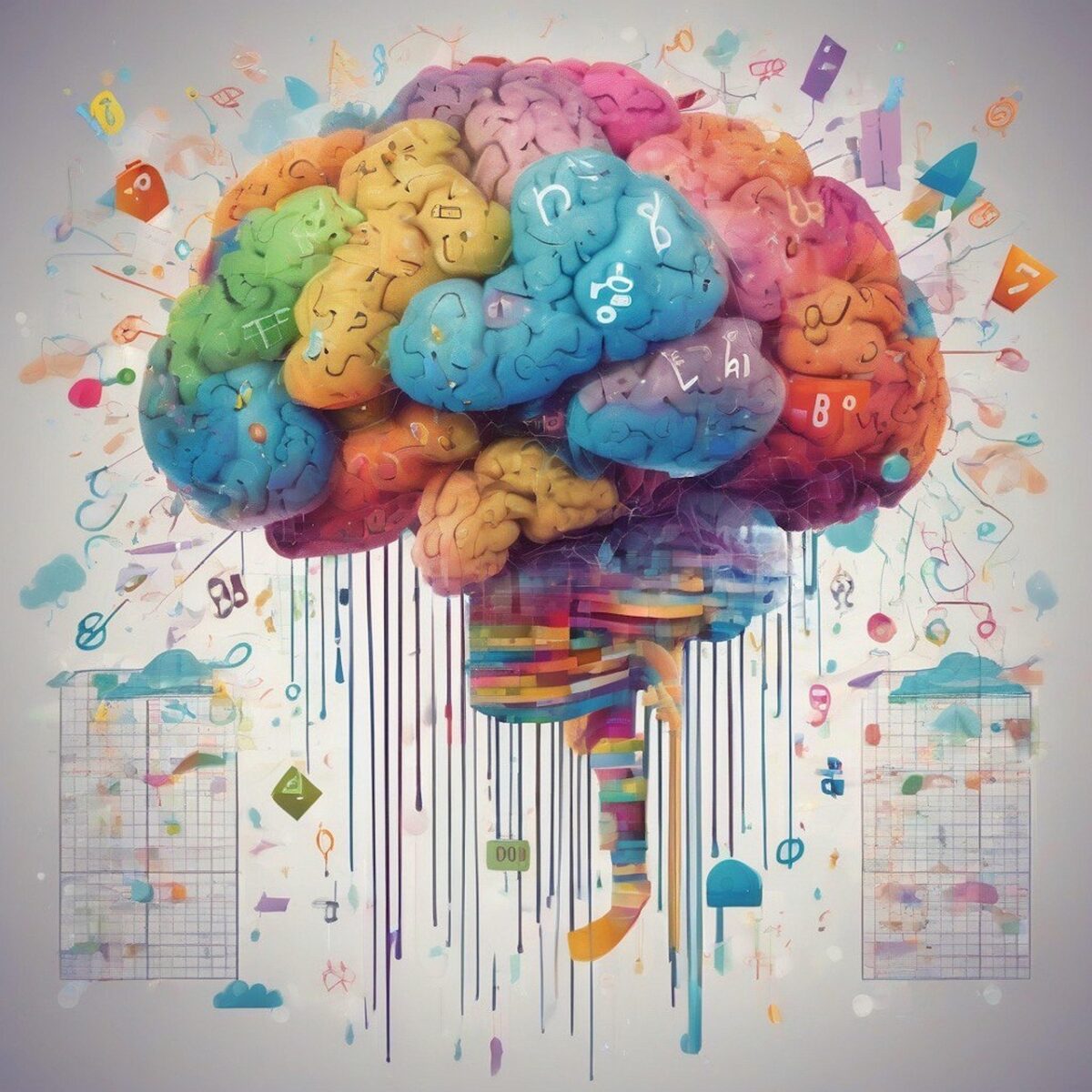
Artificial Intelligence (AI) has rapidly transformed the way we live, work, and interact with technology. From virtual assistants and recommendation systems to self-driving cars and advanced robotics, AI is everywhere. At the heart of these innovations are different models of AI—each designed to solve specific types of problems and perform unique tasks.
Understanding the various models of AI is essential for grasping how intelligent systems function. This article explores the different types of AI models, their working principles, applications, advantages, and limitations in detail.
1. What Is an AI Model?
An AI model is a mathematical and computational system trained to perform tasks by learning patterns from data. Instead of following fixed rules, AI models improve their performance over time as they process more data.
For example:
- A model trained on images can recognize objects.
- A model trained on text can generate human-like responses.
- A model trained on financial data can predict market trends.
AI models are the backbone of modern intelligent systems.
2. Categories of AI Models
AI models can be broadly categorized based on their functionality, learning approach, and architecture. The main categories include:
- Rule-Based Models
- Machine Learning Models
- Deep Learning Models
- Generative Models
- Reinforcement Learning Models
- Hybrid Models
Each category plays a unique role in the AI ecosystem.
3. Rule-Based AI Models
3.1 Overview
Rule-based models are the earliest form of AI. They operate using predefined rules created by human experts.
Example:
- IF temperature > 30°C → Turn on fan
- IF email contains “lottery” → Mark as spam
3.2 How They Work
These systems use:
- Logical rules
- Decision trees
- Condition-action pairs
They do not learn from data but follow instructions exactly as programmed.
3.3 Applications
- Simple chatbots
- Expert systems
- Automation tools
3.4 Advantages
- Easy to understand
- Predictable behavior
- No training data required
3.5 Limitations
- Cannot adapt to new situations
- Limited scalability
- Requires manual updates
4. Machine Learning Models
Machine Learning (ML) models are the foundation of modern AI. They learn patterns from data instead of relying on fixed rules.
4.1 Types of Machine Learning Models
4.1.1 Supervised Learning Models
These models are trained using labeled data.
Examples:
- Linear regression
- Logistic regression
- Decision trees
- Support vector machines
Applications:
- Spam detection
- Image classification
- Credit scoring
4.1.2 Unsupervised Learning Models
These models work with unlabeled data and find hidden patterns.
Examples:
- Clustering (K-means)
- Dimensionality reduction (PCA)
Applications:
- Customer segmentation
- Data analysis
4.1.3 Semi-Supervised Learning
Combines labeled and unlabeled data for training.
Applications:
- Medical imaging
- Speech recognition
4.2 Advantages
- Learns from data
- Adaptable
- Wide range of applications
4.3 Limitations
- Requires large datasets
- Can be computationally expensive
- May produce biased results
5. Deep Learning Models
Deep Learning is a subset of machine learning that uses neural networks with multiple layers.
5.1 Neural Networks
Neural networks mimic the human brain. They consist of:
- Input layer
- Hidden layers
- Output layer
Each layer processes data and passes it forward.
5.2 Types of Deep Learning Models
5.2.1 Convolutional Neural Networks (CNNs)
Used for image processing.
Applications:
- Facial recognition
- Medical imaging
- Object detection
5.2.2 Recurrent Neural Networks (RNNs)
Used for sequential data.
Applications:
- Language translation
- Speech recognition

5.2.3 Transformers
Modern models used in natural language processing.
Applications:
- Chatbots
- Text generation
- Language understanding
5.3 Advantages
- High accuracy
- Handles complex data
- Suitable for large-scale problems
5.4 Limitations
- Requires massive data
- High computational cost
- Hard to interpret
6. Generative AI Models
Generative models create new data instead of just analyzing existing data.
6.1 Types of Generative Models
6.1.1 Generative Adversarial Networks (GANs)
Two neural networks compete:
- Generator creates fake data
- Discriminator evaluates it
Applications:
- Image generation
- Deepfakes
- Art creation
6.1.2 Variational Autoencoders (VAEs)
Used for generating realistic data and compressing information.
Applications:
- Image synthesis
- Data compression
6.1.3 Large Language Models (LLMs)
These models generate human-like text.
Applications:
- Chatbots
- Content creation
- Translation
6.2 Advantages
- Creative capabilities
- Generates realistic outputs
- Useful in design and media
6.3 Limitations
- Risk of misuse
- Can generate false information
- Requires large training datasets
7. Reinforcement Learning Models
7.1 Overview
Reinforcement Learning (RL) models learn by interacting with an environment and receiving feedback.
7.2 How It Works
- Agent takes action
- Environment responds
- Agent receives reward or penalty
The goal is to maximize rewards over time.
7.3 Applications
- Game playing (e.g., chess, video games)
- Robotics
- Autonomous vehicles
7.4 Advantages
- Learns through experience
- Handles dynamic environments
- Suitable for decision-making tasks
7.5 Limitations
- Requires extensive training
- Complex to design
- Slow learning process
8. Hybrid AI Models
Hybrid models combine multiple AI techniques to improve performance.
8.1 Examples
- Combining rule-based systems with machine learning
- Integrating deep learning with reinforcement learning
8.2 Applications
- Smart assistants
- Autonomous systems
- Advanced analytics
8.3 Advantages
- More flexible
- Improved accuracy
- Better decision-making
8.4 Limitations
- Complex implementation
- Higher cost
- Requires expertise
9. Specialized AI Models
Some AI models are designed for specific tasks:
9.1 Natural Language Processing Models
Used for:
- Text analysis
- Translation
- Chatbots
9.2 Computer Vision Models
Used for:
- Image recognition
- Video analysis
9.3 Speech Recognition Models
Used for:
- Voice assistants
- Transcription
10. Comparing Different AI Models
| Model Type | Learning Style | Best For | Complexity |
|---|---|---|---|
| Rule-Based | No learning | Simple tasks | Low |
| Machine Learning | Data-driven | General tasks | Medium |
| Deep Learning | Neural networks | Complex tasks | High |
| Generative AI | Content creation | Creative tasks | High |
| Reinforcement Learning | Trial & error | Decision-making | High |
| Hybrid Models | Combined methods | Advanced systems | Very High |
11. Real-World Applications of AI Models
AI models are used across industries:
Healthcare
- Disease diagnosis
- Drug discovery
Finance
- Fraud detection
- Risk analysis
Transportation
- Self-driving cars
- Traffic prediction
Education
- Personalized learning
- Virtual tutors
Entertainment
- Content recommendations
- Game AI
12. Challenges in AI Models
AI models face several challenges:
Data Quality
Poor data leads to poor performance.
Bias and Fairness
Models may reflect societal biases.
Interpretability
Some models are difficult to understand.
Security Risks
AI systems can be attacked or manipulated.
13. Future of AI Models
AI models are continuously evolving. Future trends include:
- More efficient models
- Better explainability
- Increased automation
- Development of general AI
AI will likely become more integrated into everyday life.
Conclusion
Different models of AI play a crucial role in shaping modern technology. From simple rule-based systems to advanced deep learning and generative models, each type has unique strengths and applications.
Understanding these models helps us appreciate how AI systems work and how they can be applied to solve real-world problems. While challenges remain, the future of AI is promising, with endless possibilities for innovation and growth.
As AI continues to evolve, these models will become more powerful, efficient, and accessible, transforming industries and improving lives around the world.
No responses yet