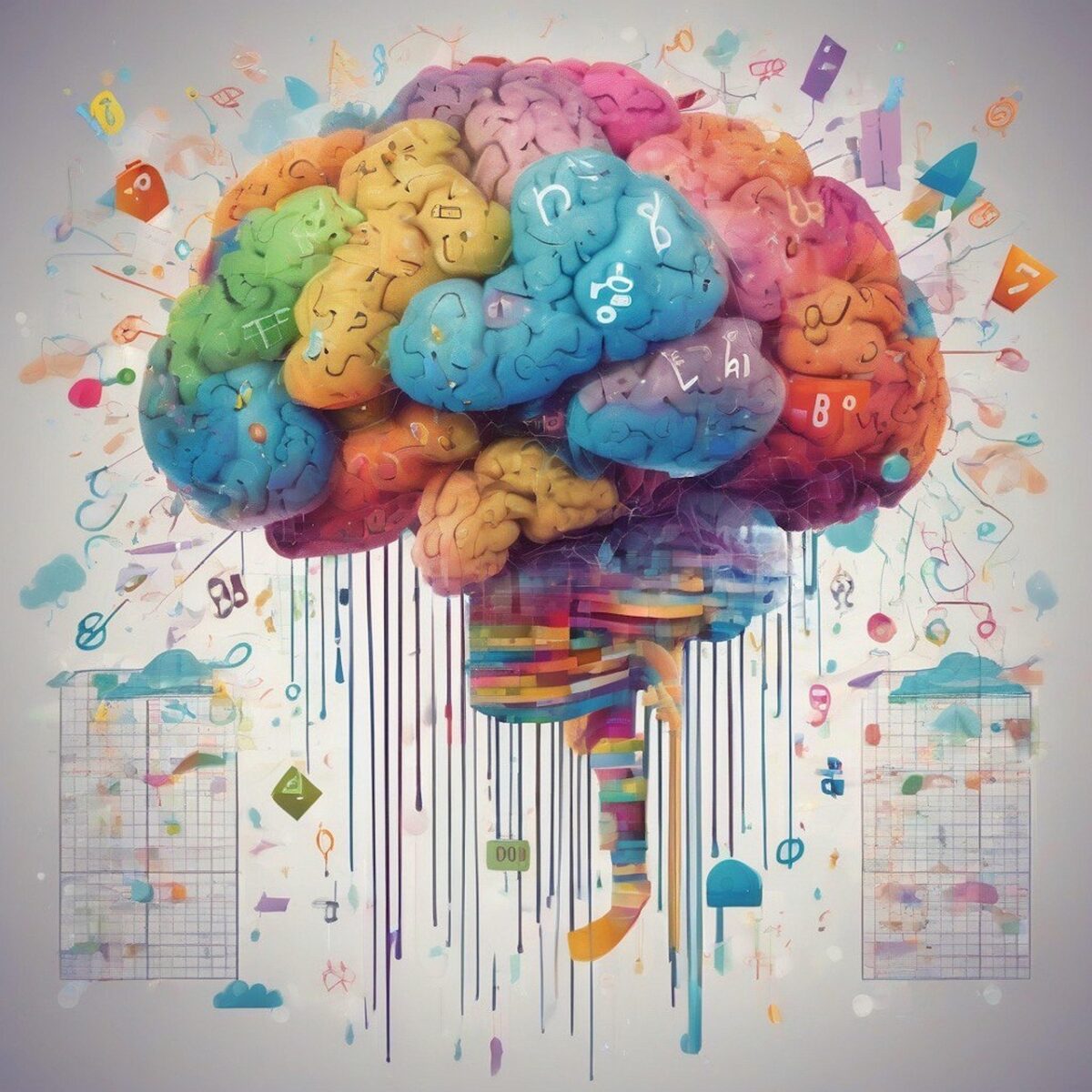
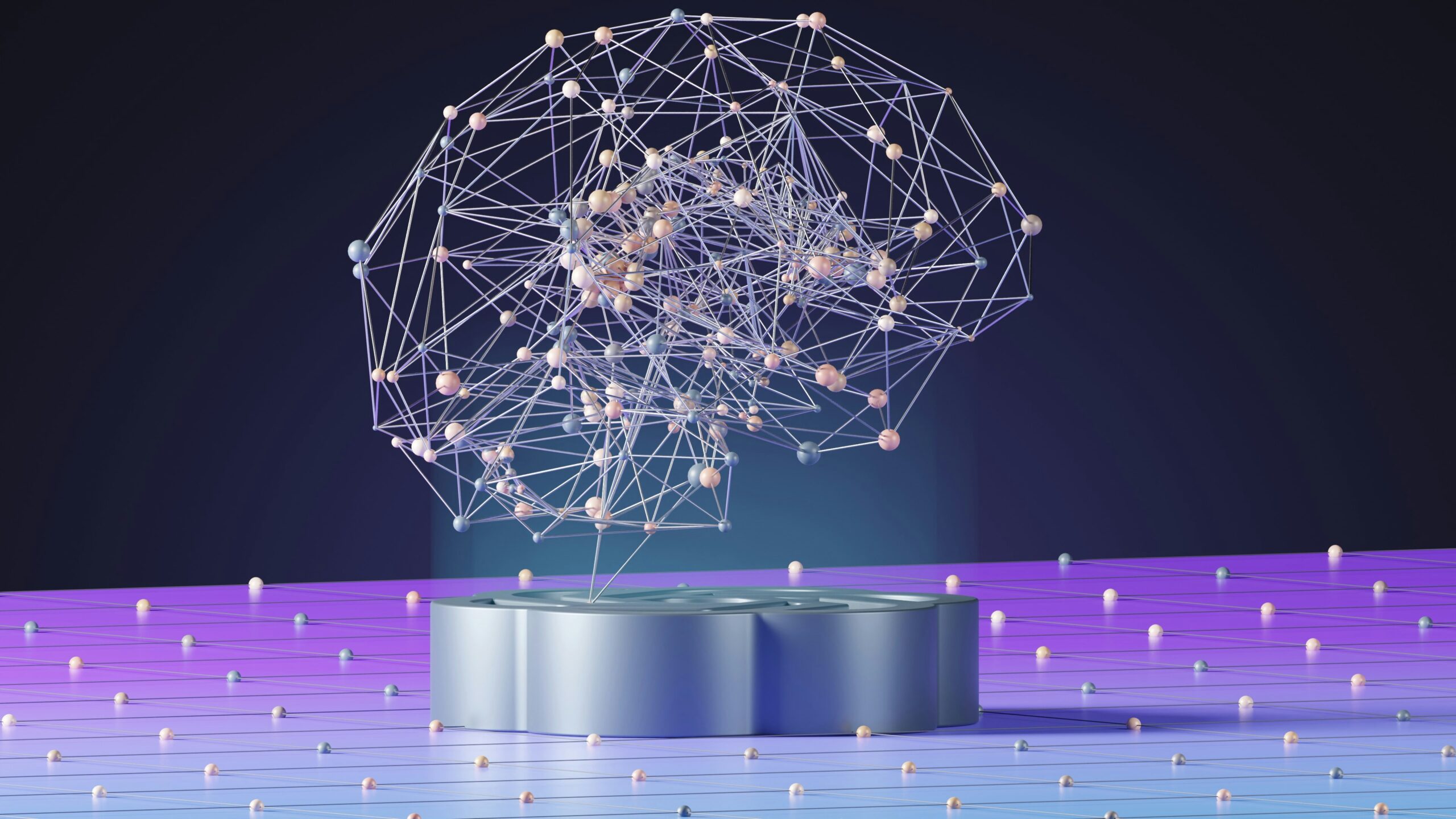
Artificial Intelligence (AI) is one of the most transformative technologies of the modern era. It powers everything from voice assistants and recommendation systems to self-driving cars and advanced medical diagnostics. But despite its widespread use, many people still wonder: how does AI actually work? This article breaks down the core concepts, components, and processes behind AI in a clear and detailed way.
1. What Is Artificial Intelligence?
Artificial Intelligence refers to the ability of machines to perform tasks that typically require human intelligence. These tasks include learning from data, recognizing patterns, understanding language, making decisions, and solving problems.
AI is not a single technology but a broad field that combines computer science, mathematics, statistics, and cognitive science. The goal is to create systems that can simulate or even surpass human intelligence in specific tasks.
2. The Core Idea Behind AI
At its heart, AI works by learning from data. Instead of being explicitly programmed with every rule, AI systems are trained using large datasets. By analyzing patterns in this data, they learn how to make predictions or decisions.
For example:
- A spam filter learns from thousands of emails labeled as “spam” or “not spam.”
- A facial recognition system learns from millions of images of faces.
- A recommendation system learns from user behavior, such as clicks and purchases.
The more data an AI system has, the better it typically performs.
3. Types of Artificial Intelligence
AI can be broadly categorized into three types:
3.1 Narrow AI (Weak AI)
This is the most common form of AI today. It is designed to perform a specific task, such as:
- Voice recognition
- Image classification
- Language translation
Narrow AI cannot operate beyond its defined scope.
3.2 General AI (Strong AI)
This refers to machines that can perform any intellectual task a human can do. General AI does not yet exist but is a major goal of AI research.
3.3 Superintelligent AI
This is a hypothetical form of AI that surpasses human intelligence in all aspects. It remains a topic of debate and speculation.
4. Key Components of AI Systems
To understand how AI works, it’s important to look at its main components:
4.1 Data
Data is the foundation of AI. It can be structured (like spreadsheets) or unstructured (like images, audio, and text). AI systems learn patterns from this data.
4.2 Algorithms
Algorithms are sets of mathematical instructions that guide how AI learns from data. They define how input data is processed and how outputs are generated.
4.3 Models
A model is the result of training an algorithm on data. It represents learned patterns and can be used to make predictions.
4.4 Training Process
Training is the process of feeding data into an algorithm so it can learn patterns. During training, the model adjusts its internal parameters to improve accuracy.
5. Machine Learning: The Engine of AI
Machine Learning (ML) is a subset of AI that focuses on teaching machines to learn from data.
5.1 Supervised Learning
In supervised learning, the model is trained using labeled data. Each input comes with a correct output.
Example:
- Input: Image of a cat
- Output: “Cat”
The model learns to map inputs to outputs.
5.2 Unsupervised Learning
Here, the data is not labeled. The model tries to find patterns or groupings on its own.
Example:
- Clustering customers based on buying behavior
5.3 Reinforcement Learning
In this approach, an AI agent learns by interacting with an environment. It receives rewards or penalties based on its actions.
Example:
- Training a robot to walk
- Teaching an AI to play a game
6. Neural Networks: Inspired by the Human Brain
One of the most powerful tools in AI is the neural network. It is inspired by the structure of the human brain.
6.1 What Is a Neural Network?
A neural network consists of layers of interconnected nodes (neurons). Each connection has a weight that determines its importance.
6.2 Layers in a Neural Network
- Input Layer: Receives the data
- Hidden Layers: Process the data
- Output Layer: Produces the result
6.3 Deep Learning
When a neural network has many hidden layers, it is called deep learning. Deep learning enables AI to perform complex tasks such as:
- Speech recognition
- Image detection
- Natural language understanding

7. How AI Learns: Step-by-Step
The process of how AI works can be broken down into several steps:
Step 1: Data Collection
Large datasets are gathered from various sources such as sensors, websites, or user interactions.
Step 2: Data Preprocessing
The data is cleaned and organized. This may include:
- Removing errors
- Filling missing values
- Normalizing data
Step 3: Choosing a Model
A suitable algorithm or model is selected based on the problem.
Step 4: Training the Model
The model learns patterns from the training data by adjusting its internal parameters.
Step 5: Evaluation
The model is tested on new data to measure its performance.
Step 6: Deployment
Once the model performs well, it is deployed in real-world applications.
8. Natural Language Processing (NLP)
NLP is a branch of AI that enables machines to understand and generate human language.
How NLP Works:
- Text is broken into smaller units (tokens)
- Words are converted into numerical representations
- Models analyze relationships between words
Applications include:
- Chatbots
- Language translation
- Sentiment analysis
9. Computer Vision
Computer vision allows machines to interpret visual information from the world.
How It Works:
- Images are converted into pixel data
- Patterns are detected using neural networks
- Objects are identified and classified
Applications include:
- Facial recognition
- Medical imaging
- Autonomous vehicles
10. Decision-Making in AI
AI systems often need to make decisions. This is done using probability and optimization techniques.
For example:
- A recommendation system predicts what you might like
- A navigation system chooses the fastest route
AI evaluates different possibilities and selects the best option based on learned patterns.
11. The Role of Big Data
AI relies heavily on large amounts of data. The rise of big data has significantly boosted AI capabilities.
Why big data matters:
- More data = better accuracy
- Diverse data = better generalization
However, handling big data also requires powerful computing systems.
12. Hardware Behind AI
AI systems require significant computational power.
Key Hardware Components:
- CPUs: General-purpose processors
- GPUs: Faster for parallel processing
- TPUs: Specialized for AI tasks
These components enable faster training and more complex models.
13. Real-World Applications of AI
AI is used across many industries:
Healthcare
- Diagnosing diseases
- Predicting patient outcomes
Finance
- Fraud detection
- Algorithmic trading
Transportation
- Self-driving cars
- Traffic prediction
Entertainment
- Content recommendations
- Game AI
14. Challenges in AI
Despite its potential, AI faces several challenges:
Data Quality
Poor-quality data leads to poor performance.
Bias
AI can inherit biases present in training data.
Interpretability
Some AI models are “black boxes,” making them hard to understand.
Security
AI systems can be vulnerable to attacks.
15. Ethical Considerations
AI raises important ethical questions:
- Should AI replace human jobs?
- How do we ensure fairness?
- Who is responsible for AI decisions?
Addressing these issues is crucial for the responsible development of AI.
16. The Future of AI
AI is evolving rapidly. Future developments may include:
- More advanced natural language understanding
- Improved human-AI collaboration
- Progress toward general AI
AI will likely continue to reshape industries and everyday life.
Conclusion
Artificial Intelligence works by combining data, algorithms, and computational power to learn patterns and make decisions. Through techniques like machine learning and deep learning, AI systems can perform complex tasks that once required human intelligence.
While AI is powerful, it is not magic. It depends on data quality, thoughtful design, and responsible use. Understanding how AI works helps us better appreciate its capabilities—and its limitations.
As AI continues to advance, it will play an increasingly important role in shaping the future. Whether in healthcare, education, or everyday technology, AI is becoming an essential part of modern life.
No responses yet