A Complete Guide to Artificial Intelligence in Robotics
Artificial Intelligence (AI) robots are no longer a concept of science fiction—they are becoming a reality that is transforming industries, economies, and daily life. From manufacturing floors and hospitals to homes and space exploration, AI-powered robots are playing an increasingly important role in shaping the modern world.
These intelligent machines are capable of performing tasks autonomously, learning from their environment, and adapting to new situations. As technology continues to advance, AI robots are becoming smarter, more efficient, and more accessible.
This article provides a comprehensive overview of AI robots, including how they work, their applications, benefits, challenges, and future potential.
Introduction to AI Robots
AI robots are machines that combine robotics with artificial intelligence. While traditional robots follow pre-programmed instructions, AI robots can learn, make decisions, and improve over time.
Key Components of AI Robots
- Sensors: Allow robots to perceive their environment
- Processors: Act as the brain of the robot
- Actuators: Enable movement and interaction
- AI Algorithms: Help robots learn and make decisions
How AI Robots Work
AI robots use technologies such as:
- Machine learning
- Computer vision
- Natural language processing
These technologies allow robots to analyze data, understand their surroundings, and perform complex tasks.
Evolution of AI Robots
Early Robotics
Early robots were simple machines designed for repetitive tasks, such as assembly line work.
Introduction of AI
With the integration of AI, robots became capable of learning and adapting, making them more versatile.
Modern AI Robots
Today’s robots can:
- Recognize faces
- Understand speech
- Navigate complex environments
- Perform delicate tasks
Types of AI Robots
Industrial Robots
Used in manufacturing for tasks like welding, assembly, and packaging.
Service Robots
Assist humans in daily tasks, such as cleaning, delivery, and customer service.
Medical Robots
Used in surgeries, diagnostics, and patient care.
Military Robots
Assist in surveillance, reconnaissance, and defense operations.
Social Robots
Interact with humans for companionship, education, and entertainment.
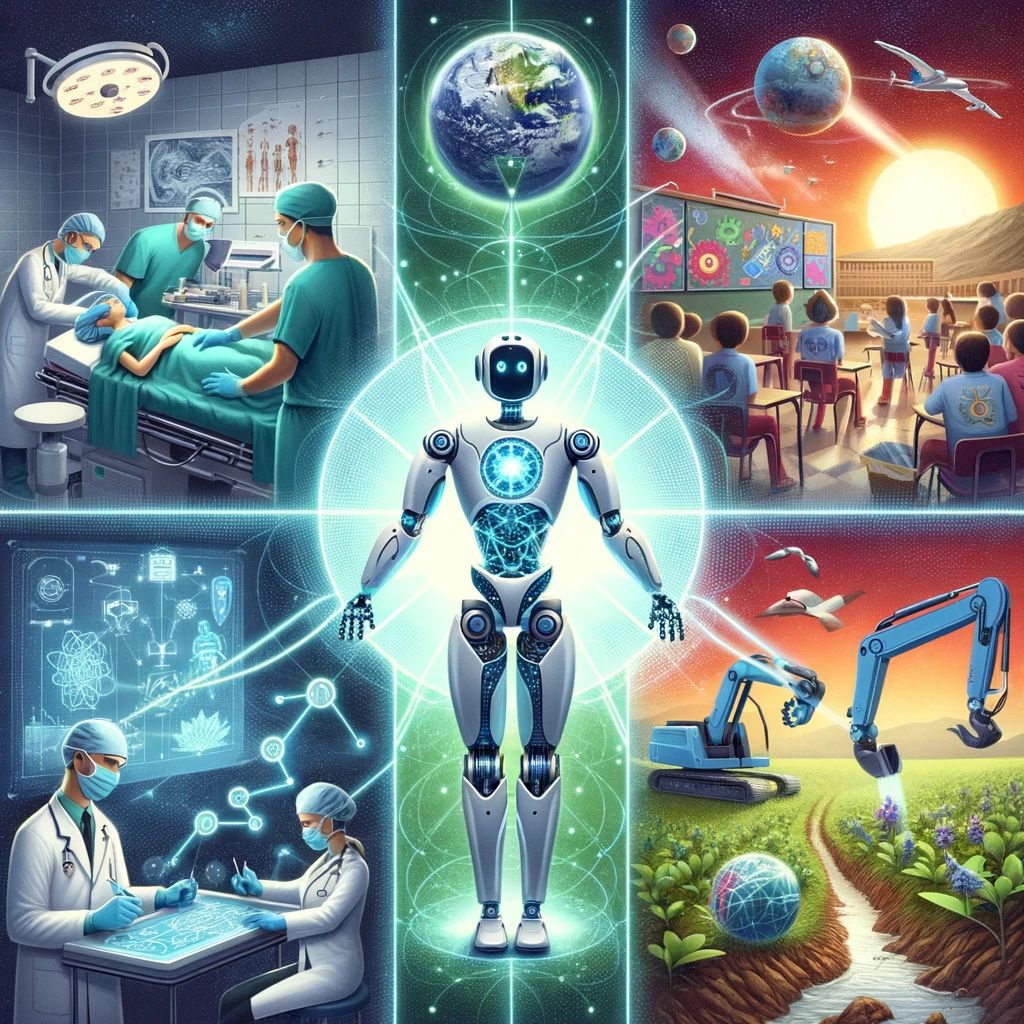
Applications of AI Robots
1. AI Robots in Healthcare
AI robots are transforming the healthcare industry.
Uses
- Surgical assistance
- Patient monitoring
- Rehabilitation support
Benefits
- Increased precision
- Reduced human error
- Improved patient outcomes
2. AI Robots in Manufacturing
Manufacturing is one of the biggest users of AI robots.
Functions
- Assembly line automation
- Quality control
- Packaging
Advantages
- Increased productivity
- Reduced costs
- Consistent quality
3. AI Robots in Agriculture
AI robots are helping farmers improve productivity.
Applications
- Crop monitoring
- Harvesting
- Pest control
Impact
- Higher yields
- Efficient resource use
4. AI Robots in Logistics and Delivery
AI robots are used for transporting goods.
Examples
- Warehouse robots
- Delivery drones
- Autonomous vehicles
Benefits
- Faster delivery
- Reduced labor costs
5. AI Robots in Education
Robots are being used as teaching assistants.
Features
- Interactive learning
- Personalized education
- Student engagement
6. AI Robots in Entertainment
AI robots are also used in entertainment.
Examples
- Theme park robots
- Gaming characters
- Virtual performers
7. AI Robots in Home Automation
Smart home robots are becoming popular.
Uses
- Cleaning
- Security
- Personal assistance
Advantages of AI Robots
1. Efficiency
AI robots can work continuously without fatigue.
2. Accuracy
They perform tasks with high precision.
3. Safety
Robots can operate in dangerous environments.
4. Cost Savings
Automation reduces labor costs.
5. Scalability
Robots can be deployed in large numbers.
Challenges and Limitations
High Costs
Developing and maintaining AI robots can be expensive.
Job Displacement
Automation may reduce the need for human labor.
Technical Limitations
AI robots may struggle with complex or unpredictable situations.
Ethical Concerns
The use of robots raises questions about privacy and control.
AI Robots vs Traditional Robots
| Feature | Traditional Robots | AI Robots |
|---|---|---|
| Learning Ability | No | Yes |
| Flexibility | Limited | High |
| Decision-Making | Pre-programmed | Adaptive |
| Efficiency | Moderate | High |
Ethical and Social Implications
Human-Robot Interaction
As robots become more human-like, interactions raise ethical questions.
Privacy Concerns
AI robots may collect sensitive data.
Responsibility
Determining accountability for robot actions is complex.
The Future of AI Robots
Emerging Trends
- Humanoid robots
- Autonomous systems
- AI-powered collaboration
Integration with Other Technologies
AI robots will integrate with:
- Internet of Things (IoT)
- 5G networks
- Cloud computing
Potential Impact
AI robots will:
- Transform industries
- Improve quality of life
- Create new opportunities
How AI Robots Will Change Daily Life
Smart Homes
Robots will manage household tasks.
Healthcare Support
Robots will assist elderly and patients.
Workplace Automation
Robots will handle repetitive tasks.
Opportunities in AI Robotics
Careers
- Robotics engineering
- AI development
- Data science
Business Opportunities
- Robotics startups
- Automation services
- AI solutions
Conclusion
AI robots are revolutionizing the way we live and work. By combining artificial intelligence with robotics, these machines are capable of performing complex tasks, learning from their environment, and adapting to new challenges.
From healthcare and manufacturing to education and entertainment, AI robots are making processes more efficient, accurate, and safe. While challenges such as cost, ethics, and job displacement remain, the benefits of AI robots are undeniable.
As technology continues to evolve, AI robots will become an integral part of our daily lives, shaping the future in ways we are only beginning to imagine.
No responses yet