For most of human history, disaster has meant surprise. A wildfire crests a ridge before anyone smells smoke. An earthquake strikes without so much as a tremor of warning. A car crash happens in the blink of an eye, and by the time help is called, precious minutes have already slipped away. Emergency response has traditionally been reactive by necessity — humans can only act once they know something has gone wrong, and knowing has always been the hardest part.
That equation is changing. Artificial intelligence is increasingly closing the gap between the moment a disaster begins and the moment help is mobilized, sometimes shrinking it from hours to seconds. From satellites that spot a wildfire’s first wisp of smoke to sensors embedded in city infrastructure that detect a gas leak before a resident does, AI is quietly becoming one of the most powerful tools humanity has ever had for anticipating, detecting, and responding to disaster and accidents. This shift isn’t just a technical curiosity — it is, in very real terms, saving lives.
Why Early Detection Matters So Much
Emergency responders have long understood a simple truth: the first few minutes after a disaster or accident occur are often the most decisive. In medicine, this concept is sometimes called the “golden hour” — the window after a traumatic injury during which prompt treatment dramatically improves the odds of survival. The same logic extends to almost every category of disaster. A wildfire caught within its first few minutes might be extinguished by a single truck. Left to grow for an hour, it might require hundreds of firefighters and consume thousands of acres. An earthquake’s early warning, even if it’s only a few seconds, can be enough for a train to stop, a surgeon to pause a delicate procedure, or a child to duck under a school desk before the worst shaking arrives.
The challenge has always been detection speed and accuracy. Human observers are limited — they can’t watch every forest, every fault line, every highway, every industrial facility at once. This is precisely the kind of problem AI is well suited to solve. Unlike a human, an AI system doesn’t get tired, doesn’t need to sleep, and can process enormous volumes of sensor data, satellite imagery, or video feeds simultaneously, spotting patterns that would be invisible or overwhelming to a person.
Wildfires: Catching the Spark Before It Becomes an Inferno
Few disaster categories illustrate AI’s growing role as vividly as wildfire detection. Traditionally, wildfires were often reported the old-fashioned way: someone spotted smoke and called it in, sometimes hours after ignition, especially in remote or sparsely populated regions. By the time firefighters arrived, the fire may have already spread across a wide area, fueled by wind and dry vegetation.
Today, networks of AI-powered cameras are mounted on mountain ridges and towers across fire-prone regions, continuously scanning the horizon. These systems use computer vision models trained specifically to distinguish smoke from clouds, fog, or dust, flagging anomalies within minutes of ignition and alerting fire agencies before a human observer would likely notice anything at all. Some systems combine this visual monitoring with satellite thermal imaging, which detects unusual heat signatures on the ground even through smoke or darkness, adding another layer of confirmation.
Beyond detection, AI is also being used to predict where wildfires are likely to start and how they will spread once ignited. By analyzing variables like vegetation dryness, wind patterns, humidity, temperature, and historical fire data, machine learning models can generate fire risk maps that help agencies position resources proactively rather than waiting to react. During an active fire, similar models can simulate how the blaze might move across terrain in the coming hours, allowing evacuation orders to be issued with far more precision and lead time than was previously possible. This predictive capability doesn’t just help firefighters combat existing flames — it helps entire communities know when, and in which direction, to evacuate.
Earthquakes: Seconds That Save Lives
Earthquakes present a uniquely difficult detection challenge because, unlike wildfires or floods, they strike without any visible buildup. However, there is a subtle physical advantage that makes early warning possible: earthquakes generate two types of seismic waves that travel at different speeds. The faster-moving primary waves are usually not the ones that cause the most damage, while the slower, more destructive secondary waves arrive moments later. AI-enhanced earthquake early warning systems are built to detect that initial, less damaging wave, instantly analyze it, and estimate the earthquake’s magnitude and location before the more dangerous shaking begins.
This might sound like a small window of time, and often it is — sometimes just a handful of seconds. But those seconds matter enormously. Automated systems have been used to halt high-speed trains before violent shaking reaches the tracks, to trigger elevators to stop at the nearest floor and open their doors, to pause surgeries, and to send mobile phone alerts urging people to drop, cover, and hold on. AI plays a critical role here by rapidly filtering out noise from genuine seismic signals and rapidly calculating estimated intensity across different zones, since not every area affected by an earthquake experiences it with the same severity. The faster and more accurately these calculations happen, the more useful the warning becomes.
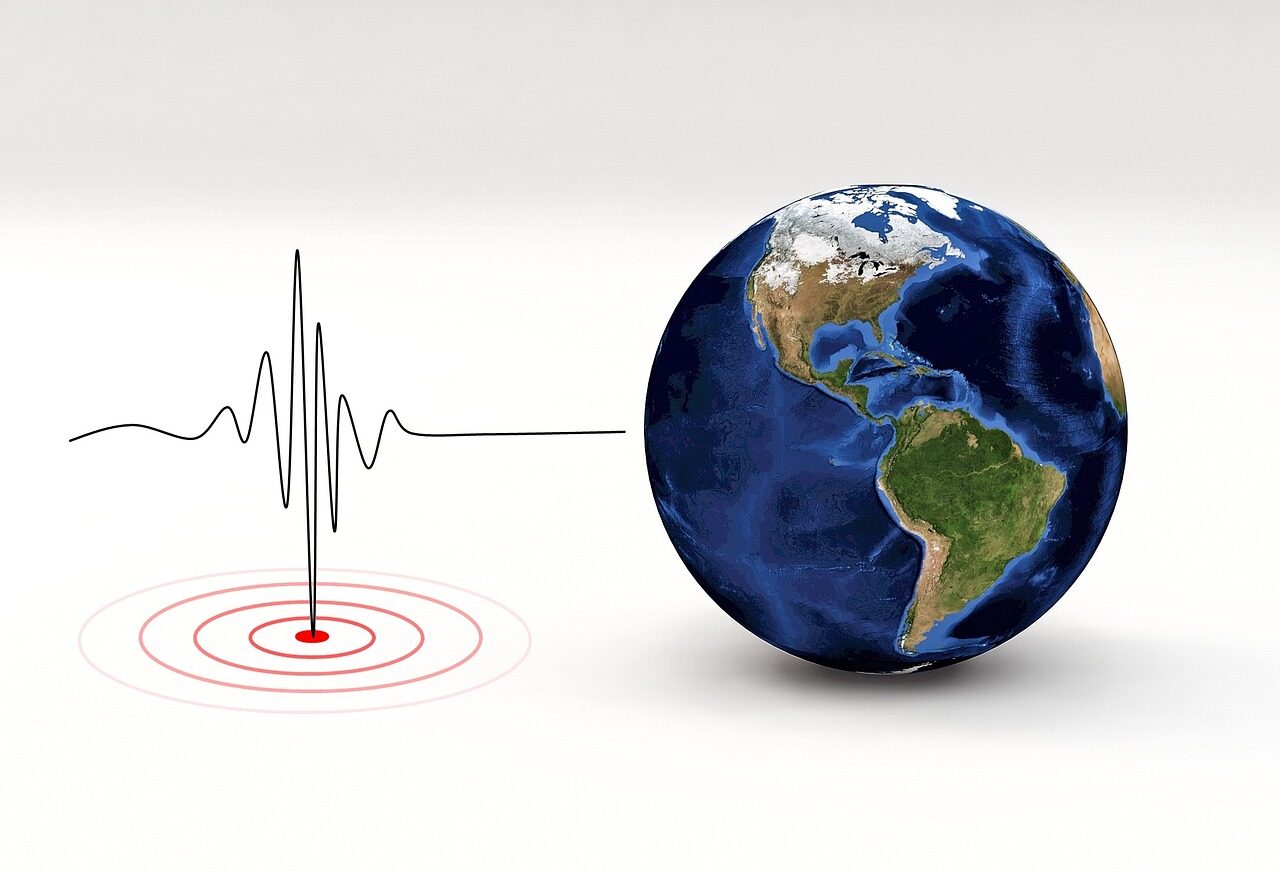
Researchers are also using AI to study patterns in seismic activity that might eventually help forecast, rather than merely detect, major earthquakes — though this remains one of the most scientifically challenging problems in the field, since earthquake prediction, as opposed to rapid early detection after onset, has proven extraordinarily difficult even with advanced computational tools.
Floods: Modeling Water Before It Rises
Floods are among the most predictable disasters in some ways, and among the most chaotic in others. Weather patterns can be forecast days in advance, but the exact way water will move once heavy rainfall hits a specific landscape — accounting for terrain, drainage infrastructure, soil saturation, and river levels — is enormously complex to model accurately. AI has become an important tool here as well, ingesting rainfall data, river gauge readings, satellite imagery, and topographic information to generate flood forecasts with a level of geographic specificity that was previously out of reach.
Instead of a general warning that a region “may experience flooding,” AI-enhanced systems increasingly aim to tell emergency managers which specific neighborhoods, roads, or riverbanks are likely to flood, and roughly when. Some organizations have deployed these systems in vulnerable regions with limited traditional monitoring infrastructure, since AI flood models can sometimes generate useful forecasts even in areas lacking dense networks of physical river gauges by relying more heavily on satellite and weather data. This has proven particularly valuable in parts of the world where flood monitoring infrastructure has historically been sparse, helping extend life-saving warnings to communities that previously had little advance notice at all.
Severe Weather and Hurricanes: Sharper Forecasts, Longer Lead Times
Meteorology has used computational models for decades, but AI is now enhancing traditional forecasting in meaningful ways. Machine learning models trained on decades of historical weather data can identify subtle atmospheric patterns that precede severe weather events like tornadoes, hurricanes, and intense storms, sometimes extending warning times beyond what traditional physics-based models alone could achieve.
For hurricanes specifically, AI is being used to improve predictions of storm intensity and track, two of the most difficult aspects of hurricane forecasting to get right. A hurricane’s exact path and how quickly it strengthens can shift rapidly, and even small errors in these predictions can mean the difference between an accurate evacuation zone and a dangerously wrong one. By analyzing atmospheric and oceanic data at a scale and speed no team of human forecasters could match manually, AI models can help refine these predictions, giving coastal communities more precise and often earlier information about when and where to expect landfall.
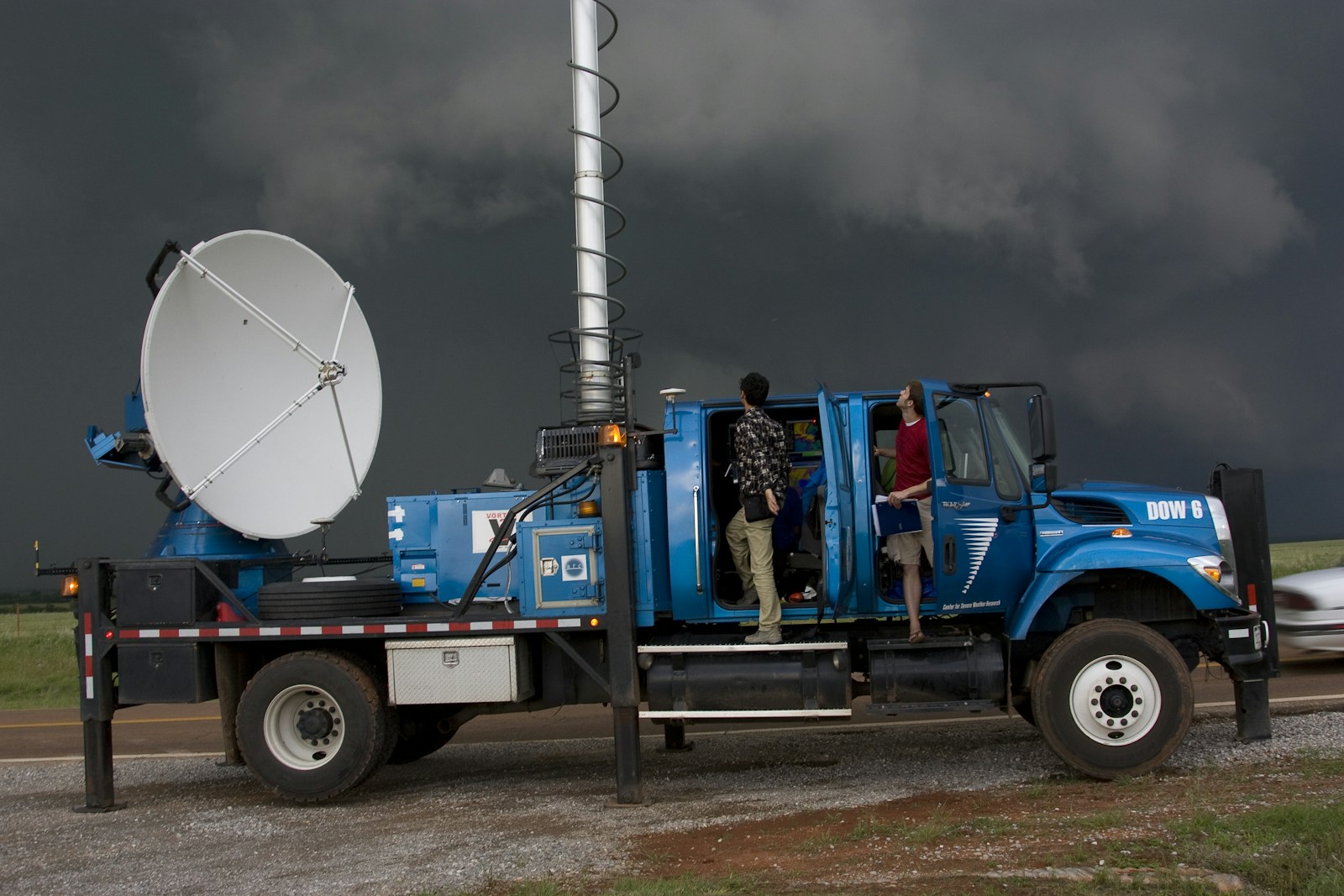
Tornadoes remain notoriously difficult to predict precisely because of how quickly and unpredictably they form, but AI-assisted radar analysis is helping meteorologists identify the atmospheric conditions and radar signatures associated with tornado formation more quickly, in some cases extending average warning times and giving people in the storm’s path more precious minutes to take shelter.
Road Safety: Preventing Accidents Before They Happen
While much of the conversation about disaster detection focuses on large-scale natural events, AI is also transforming how we detect and respond to everyday accidents, particularly on roads. Modern vehicles increasingly come equipped with AI-driven safety systems that continuously monitor the environment around the car, watching for pedestrians stepping into the road, vehicles in a blind spot, or sudden braking from the car ahead. These systems can apply emergency braking or alert a driver a fraction of a second faster than human reflexes typically allow, and that fraction of a second frequently makes the difference between a near-miss and a collision.
Beyond individual vehicles, AI is being deployed more broadly across transportation infrastructure. Smart traffic camera systems can detect accidents the moment they happen by analyzing unusual patterns in traffic flow, sudden stops, or vehicle collisions captured on camera, automatically alerting emergency services often before any bystander has had the chance to place a call. This is especially valuable on highways and remote stretches of road where accidents might otherwise go unnoticed for a dangerously long period of time.
AI is also playing a growing role in analyzing driver behavior to prevent accidents before they occur. Fleet management systems used by trucking and delivery companies increasingly monitor for signs of driver fatigue or distraction, using cameras and sensors to detect drowsy driving patterns and alert drivers or dispatchers before a serious incident occurs. While this raises understandable questions about workplace privacy that companies and regulators continue to work through, the safety benefits in high-risk industries like long-haul trucking have been notable.
Industrial and Infrastructure Accidents
Beyond the road, AI is helping detect dangerous conditions in industrial settings before they escalate into major accidents. Factories, power plants, pipelines, and other critical infrastructure increasingly rely on networks of sensors that continuously monitor for signs of equipment failure, unusual vibrations, temperature spikes, or chemical leaks. AI models trained on this sensor data can often detect the subtle warning signs of an impending equipment failure well before it would be obvious to a human inspector, a practice often referred to as predictive maintenance.
This matters enormously in industries where a small malfunction can escalate into catastrophe. A gas pipeline with a slow leak, a chemical storage tank showing early signs of corrosion, or an electrical grid component nearing failure can all potentially be flagged by AI systems days or even weeks before a human inspection might have caught the same problem, simply because AI can monitor continuously and detect patterns across enormous volumes of sensor data that would be impractical for a human team to review manually. Some cities have also begun using AI-powered sensors to detect gas leaks in urban infrastructure, allowing utility companies to respond and repair leaks before they become dangerous, rather than waiting for a resident to report the smell.
Search and Rescue: Finding People Faster
Once a disaster has struck, the race to locate and rescue survivors becomes its own urgent challenge, and AI is increasingly assisting in this phase as well. Drones equipped with thermal cameras and computer vision software can scan large areas of collapsed buildings, flooded regions, or wilderness terrain far more quickly than ground search teams working alone, identifying heat signatures that may indicate a person in need of rescue. This is especially valuable in the aftermath of events like earthquakes or building collapses, where searching manually through rubble is slow, dangerous, and physically limited by what human searchers can see and access.
AI is also being used to analyze social media posts and emergency communication data during large-scale disasters, helping responders identify where help is most urgently needed. During major hurricanes or floods, for example, people often post real-time updates about their location and situation on social platforms. AI systems trained to parse this kind of unstructured data can help emergency coordinators identify clusters of need, even in situations where formal emergency phone lines are overwhelmed or inaccessible due to damaged infrastructure.

Public Health Emergencies and Disease Outbreaks
Disaster detection isn’t limited to physical events like fires and floods — it also extends to public health. AI systems that monitor patterns in hospital admissions, pharmacy purchases, search engine queries, and even wastewater samples have shown promise in detecting the early signs of a disease outbreak before it becomes widely apparent through traditional public health reporting channels, which often lag behind the actual spread of illness by days or weeks.
This kind of early detection matters because infectious disease outbreaks, much like wildfires, tend to grow exponentially if not caught and addressed quickly. A cluster of unusual symptoms identified early by an AI system monitoring health data trends can prompt public health officials to investigate and respond while an outbreak is still small and containable, rather than after it has already spread widely through a community.
The Limits and Risks of Relying on AI for Disaster Detection
For all its promise, it’s important to be honest about the limitations of AI in this space. These systems are not infallible, and the stakes of getting it wrong — in either direction — are extremely high. A false alarm, where an AI system incorrectly flags a disaster that isn’t actually happening, can lead to unnecessary panic, wasted resources, and over time, a kind of alert fatigue where people begin to ignore warnings altogether. On the other hand, a missed detection, where an AI system fails to catch a genuine emerging disaster, can be even more dangerous, especially if communities have come to rely heavily on these automated systems and reduce other forms of monitoring as a result.
AI systems are also only as good as the data they’re trained on. In regions with limited historical data or sparse sensor coverage, AI predictions tend to be less reliable, which risks creating a troubling gap where wealthier, more heavily monitored regions get better protection while poorer or more remote regions continue to lack adequate early warning, even though these communities are often more vulnerable to disasters in the first place. Bridging this gap is an ongoing challenge for researchers, governments, and humanitarian organizations working to make these tools more broadly accessible.
There’s also the question of over-reliance. As AI systems become more capable, there’s a risk that human expertise and vigilance could gradually erode, leaving communities more vulnerable if a system fails, is compromised, or simply hasn’t been trained to recognize a novel type of threat it hasn’t encountered before. Most experts in this field emphasize that AI should be thought of as a powerful complement to human judgment and traditional monitoring methods, not a wholesale replacement for them.
Finally, questions of equity and access remain significant. Advanced disaster detection systems are expensive to build and maintain, and there is a real risk that the communities most vulnerable to disasters — often lower-income regions with the least existing infrastructure — are also the ones least likely to have access to these cutting-edge protective tools, at least in the near term. Closing this gap will likely require deliberate investment and international cooperation rather than assuming the technology will naturally spread to where it’s needed most.
What This Means for the Future
Despite these challenges, the trajectory is clear: AI is becoming an increasingly central part of how societies detect, prepare for, and respond to disasters and accidents. The technology is likely to keep improving, becoming faster, more accurate, and more widely deployed across regions and disaster types that haven’t yet benefited from it as fully as wildfire-prone areas or earthquake zones have.
What makes this particularly meaningful is that disaster response has always been, at its core, a race against time. Every advance that shortens the gap between when a dangerous event begins and when the right people know about it translates directly into lives saved, property protected, and communities given a fighting chance to respond effectively rather than simply react to devastation after the fact.
This doesn’t mean disasters will disappear, or that AI can prevent every accident or catastrophe. Nature will still produce earthquakes, wildfires, and storms, and human error will still lead to accidents on roads and in workplaces. But the window of warning — that critical, often life-or-death gap between the first sign of trouble and effective human response — is steadily growing wider because of these tools. In a world where disasters and accidents will never be fully eliminated, that expanding window may be one of the most important gifts AI has to offer: not the prevention of every tragedy, but the chance for more people, in more places, to get out of harm’s way in time.
No responses yet